How to Set Up Your First Montessori-Inspired Shelf
February 8, 2026
Why the Shelf Matters
In Montessori, the environment is considered the “third teacher” — after the parent and the child’s own inner drive. A well-prepared shelf is one of the most powerful tools a parent has for supporting independent play and learning.
The goal is simple: create a space where your child can choose their own work, engage deeply, and return materials when finished.
Choosing Your Shelf
You don’t need to spend a lot of money. A low, open bookshelf or cube shelf works perfectly. The key features are:
- Low enough that your child can reach all shelves independently
- Open-fronted so materials are visible (not hidden behind doors)
- Sturdy and stable — anchor it to the wall for safety
IKEA’s KALLAX and TROFAST systems are popular choices, as are simple wooden cube shelves.
What to Put on the Shelf
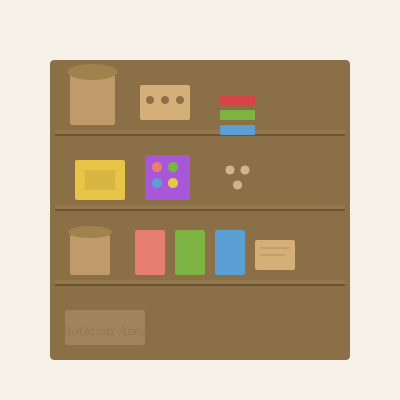
Less is more. A common mistake is filling the shelf with too many items. Aim for 3–5 activities on each shelf, with space between each one.
Choose activities that match your child’s current developmental interests. Look for:
- Practical life activities — pouring, spooning, sorting
- Sensory materials — texture boards, nature collections, sand trays
- Fine motor work — threading, pegging, stacking
- Language and literacy — books, picture cards, alphabet materials
Rotating Materials
Change out activities every few weeks (or when you notice your child has lost interest). Keep a box of “retired” materials and rotate them back in later.
How to Arrange the Shelf
Arrange activities from simplest to most complex, left to right. This visual cue helps children self-select appropriate challenges.
Each activity should be:
- Complete — everything needed is in the basket or tray
- Beautiful — natural materials, harmonious colors
- Breakable (within reason) — glass and ceramic can be used with supervision; they teach children to be careful
A Word on Trays and Baskets
Trays and baskets are the heart of Montessori presentation. They define the “workspace” and make carrying and returning materials easy. Wooden trays, wicker baskets, and small ceramic bowls are all lovely choices.
The Biggest Tip
Set up the shelf, show your child each activity once with slow, deliberate movements, then step back and observe. Resist the urge to direct or intervene. The magic happens in the space between the invitation and your child’s response.